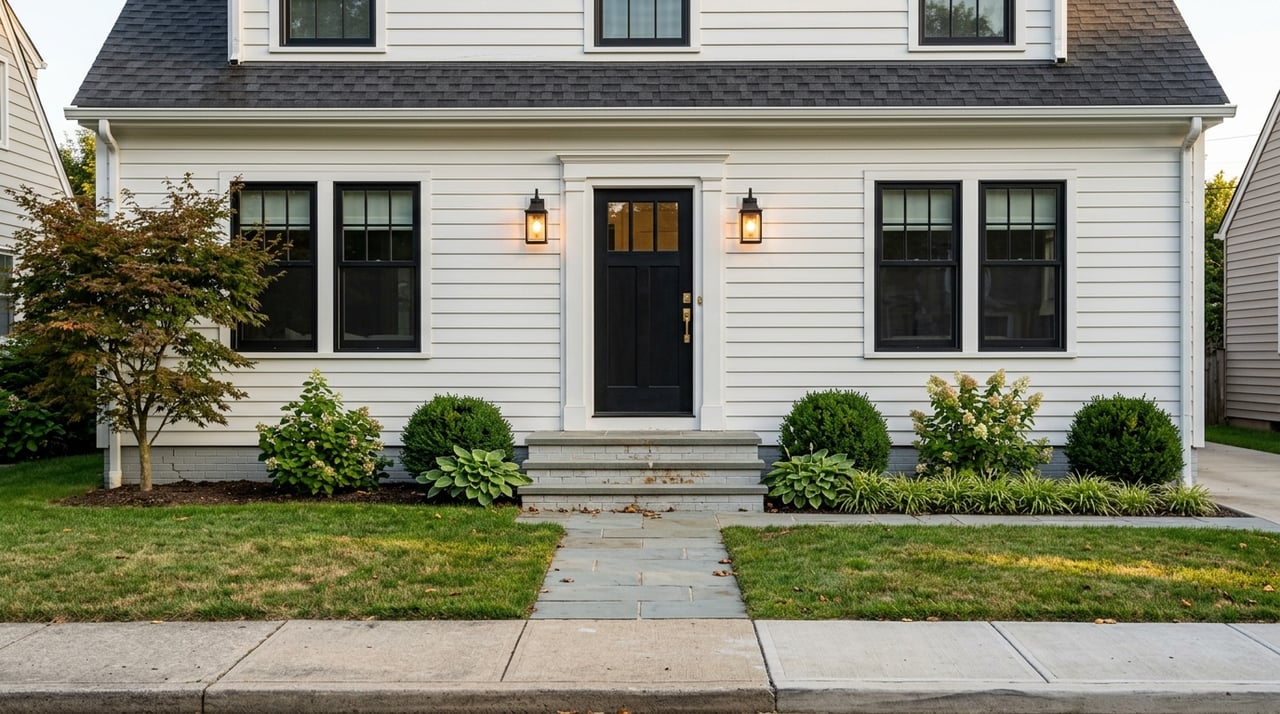
If you are trying to make sense of Whitestone home prices, you are not alone. At first glance, the market can look inconsistent, especially when one home is listed under $700,000 and another is priced above $2 million. The good news is that Whitestone becomes much easier to understand once you look at housing type, lot size, condition, and block-by-block differences. Let’s break it down.
Whitestone prices in context
Whitestone’s single-family market sits in the same general price range as nearby parts of Northeast Queens. Current single-family listing data in ZIP code 11357 shows a median listing price of about $1.09 million across 91 homes. In nearby Bayside’s 11361 ZIP, the median listing price is about $1.1 million across 110 homes.
Little Neck can look less expensive if you only look at ZIP-wide listing numbers. Its ZIP median listing price is about $448,500, but that number includes a broader mix of housing types. NYC Finance one-family sales data for 2025 puts Little Neck’s median one-family sale at about $1.05 million, which puts it much closer to Whitestone in actual detached-home pricing.
That matters if you are comparing neighborhoods and trying to decide where your budget goes furthest. In Whitestone, you are generally shopping in the same broad detached-home conversation as Bayside and Little Neck, even if the headlines can make them seem farther apart.
Whitestone’s buyer price range
Current Whitestone listings show a wide practical range for buyers. Recent examples include a pending 3-bedroom, 2-bath house at $689,000, active homes around $1.325 million to $1.328 million, and a higher-end listing at $2.498 million.
That does not mean every home fits neatly into one average. It does suggest that many buyers entering the Whitestone single-family market are looking at a spectrum that starts in the high $600,000s, moves through the low-to-mid $1 million range, and extends higher for larger or more premium properties.
If you are planning your search, this is a reminder to go beyond the asking price alone. In Whitestone, two homes with similar bedroom counts can live in very different value categories based on lot size, layout, updates, and exact location.
Why Whitestone feels different
Whitestone is not a one-size-fits-all neighborhood. According to the city’s planning profile, it is made up largely of one- and two-family detached houses, but the housing stock changes from one area to another.
North of the Cross Island Parkway, many blocks were developed after World War II. In eastern sections, you will find older and often larger detached homes. South of the Cross Island, there are smaller lots, semi-detached homes, and 1950s garden apartments.
For you as a buyer or seller, that means the phrase “Whitestone home” can describe very different products. Some homes offer a more spacious detached setup, while others may sit on tighter lots or share more similarities with nearby semi-detached housing patterns.
Lot size matters more than you think
One of the clearest drivers of value in Whitestone is lot size. The city’s zoning and planning documents show that some detached-home areas allow homes on 3,800-square-foot lots, while other contextual districts require minimum lots of 5,700 square feet and 60 feet of width.
Sample NYC Finance assessment records reflect that same spread in real-world properties. Some Whitestone parcels are around 1,476 to 2,132 square feet, which often aligns with attached or semi-detached homes. Detached lots can range from about 3,770 to 6,488 square feet, with many examples landing near 4,000 to 5,400 square feet.
This helps explain why pricing can vary so much even within the same neighborhood. A detached home on a wider, more usable lot often competes in a different tier than a home with less outdoor space or a more compact footprint.
What buyers should compare carefully
If you are evaluating single-family homes in Whitestone, it helps to compare more than bedrooms and bathrooms. The local market rewards details that affect how a home lives day to day and how it may hold value over time.
Focus on these factors when comparing properties:
- Housing type: Detached, semi-detached, and attached homes do not always command the same pricing.
- Lot dimensions: A wider or deeper lot can change both function and value.
- Home condition: Updated homes may attract stronger pricing than homes needing repairs or renovation.
- Block pattern: Housing style, density, and lot consistency can vary noticeably from one section of Whitestone to another.
- Overall usability: Layout, parking, storage, and outdoor space can shape what a home feels like beyond its square footage.
This is where local analysis matters. A home that looks expensive on paper may make more sense once you understand the lot, condition, and block. On the other hand, a lower-priced property may need enough work that the true cost is much higher.
How Whitestone compares with Bayside
Bayside shares a similar pricing tier for single-family homes, but the housing mix is broader. City planning materials describe Bayside as an area with one- and two-family detached and semi-detached homes, but also zoning in many areas that can allow attached row houses and multifamily development.
Queens Community Board 11 also describes Bayside as a mix of garden apartments, low-rise apartments, attached and semi-attached homes, and one- and two-family houses. In practical terms, that means Bayside often offers a wider range of housing forms than Whitestone’s lower-rise detached core.
For you, that can affect both search strategy and price comparisons. A single-family listing in Bayside may be competing in a more mixed housing environment, while Whitestone often appeals to buyers who specifically want a low-rise, largely detached-home setting.
How Whitestone compares with Little Neck
Little Neck tends to read a bit more suburban in its housing pattern. Community Board 11 describes it as a neighborhood of one-family homes, with smaller Bossert homes north of Northern Boulevard, larger homes south of Northern Boulevard, and a large garden apartment complex in the southern part of the district.
Sample tax records show that Little Neck lot sizes can vary widely, from around 2,600 square feet up to 10,220 square feet, with several in the 5,000 to 7,000 square-foot range. Whitestone often falls in the middle, with many detached examples in the 4,000 to 6,500 square-foot range and smaller semi-detached lots in the low 2,000s.
That makes Whitestone a middle-ground option in some respects. It often offers more consistency in detached-home character than Bayside, but without the same lot-size extremes you may see in parts of Little Neck.
What current market pace means
Market pace can shape both buyer expectations and seller strategy. Realtor.com market snapshots for ZIP code 11357 show 220 homes for sale, a median of 49 days on market, and a 97% sale-to-list ratio in Whitestone.
Nearby areas are moving a bit faster. Bayside’s 11361 ZIP shows 104 homes for sale, 43 days on market, and a 98% sale-to-list ratio. Little Neck’s 11362 ZIP shows 118 homes for sale, 42 days on market, and a 97% sale-to-list ratio.
Whitestone appears slightly more inventory-heavy and a bit slower than those nearby neighborhoods. For buyers, that can sometimes create more room to negotiate on price, repairs, or closing terms. For sellers, it means preparation and pricing still matter if you want to attract serious attention early.
Negotiation in the Whitestone market
In a market like Whitestone, negotiation is rarely just about the number on the listing. The strongest results usually come from understanding how a home fits its immediate competition.
Well-located, updated homes can still trade close to list price. Homes that need work, sit on less efficient lots, or compete against better-presented properties may give buyers more leverage.
If you are buying, this is where discipline matters. If you are selling, this is where presentation, pricing, and a realistic read of the market can make a meaningful difference.
The bottom line on Whitestone single-family homes
Whitestone belongs in the same broad detached-home price conversation as Bayside and Little Neck. What sets it apart is that value is often shaped less by the neighborhood name itself and more by the specific block, lot, home style, and condition.
If you are buying in Whitestone, it helps to look closely at what each property really offers beyond the headline price. If you are selling, a careful pricing strategy and a strong understanding of your home’s lot, condition, and competition can help you position it well.
That kind of block-by-block analysis is where experience really shows. If you want clear, honest guidance on buying or selling in Northeast Queens, Joanne Hantzopoulos can help you navigate the numbers and the nuances with care.
FAQs
What is the typical price range for a Whitestone single-family home?
- Current examples suggest a practical range from the high $600,000s into the mid $1 million range, with some premium homes priced higher.
How does Whitestone compare with Bayside for single-family homes?
- Whitestone and Bayside are in a similar overall price tier, but Bayside has a broader housing mix that includes more attached, semi-detached, and multifamily product.
Why do Whitestone home prices vary so much?
- Prices can vary based on housing type, lot size, home condition, and block-by-block location within Whitestone.
Are most homes in Whitestone detached?
- Whitestone is largely made up of one- and two-family detached homes, though some sections also include semi-detached homes and other low-rise housing types.
Does Whitestone offer negotiation room for buyers?
- Current market data suggests Whitestone is slightly slower and more inventory-heavy than nearby Bayside and Little Neck, which can create some negotiating room depending on the property.
What should buyers focus on in the Whitestone market?
- Buyers should pay close attention to lot size, housing type, condition, and how the home compares with nearby listings on the same or similar blocks.